After months away, home should feel instantly familiar. Instead, it can feel like returning to a life that learned to continue without you.
I start coming home long before I actually leave the yacht.
During the busiest weeks, I build a version of it in my head. It is peaceful, naturally. I am well-rested in this version, which should have been the first clue that it wasn’t entirely realistic. There is nowhere I need to be, nobody waiting for a drink and no radio clipped to me in case somebody suddenly needs something.
I picture James. I picture the dogs. I picture the ordinary stretches of time that most people barely notice while they are living them.
When you work away for months, those ordinary moments begin to feel like something you need to recover.
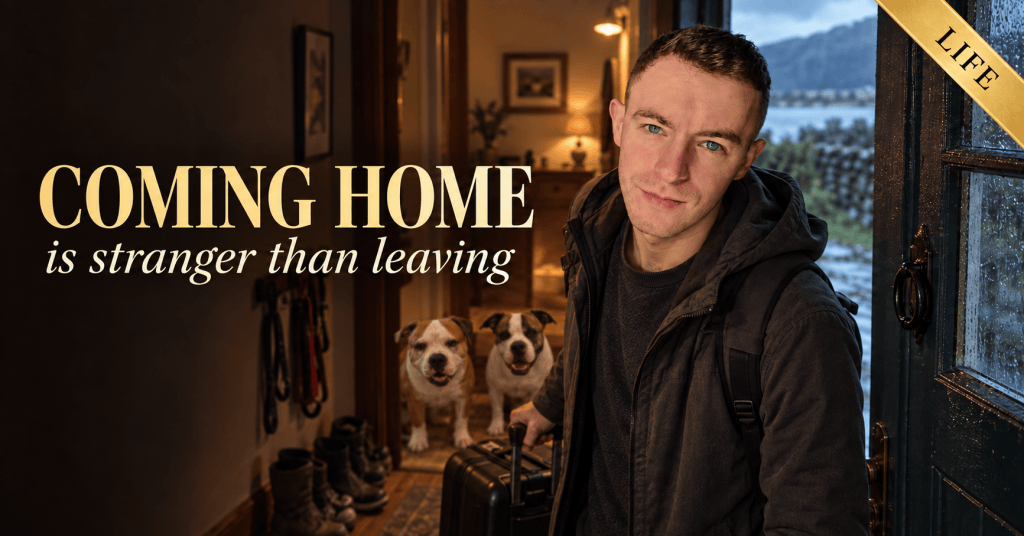
I think about the time I have missed with dogs whose lives will always be too short. I think about family members getting older and others becoming ill. Time does not pause simply because I am earning a living somewhere else, and illness has a particularly brutal way of making that impossible to ignore.
So I count down.
There are this many weeks left. This many guest trips. This many morning alarms, late finishes and uniform changes between me and home.
Then the day finally arrives. I get off the plane, step onto Scottish soil and feel the weight of yacht life begin to lift almost immediately.
That part is real.
The strange part comes afterwards.
The Edited Version of Home
People generally understand leaving.
There is a flight to catch, a contract to complete and a job waiting at the other end. My suitcase is packed. My documents are checked repeatedly because apparently I believe passports can vanish if left unsupervised.
There is sadness, but there is also movement. I know what I am doing.
For anyone unfamiliar with yacht work, it is not simply a job that happens to be near the sea. I live where I work, often for months at a time. There is no commute separating the two and very little physical distance between being on duty and being finished for the day.
Everything works around the guests, the programme and the needs of the vessel. As a steward, I am paid to notice things before somebody has to ask: the empty glass, the missing napkin, the room that needs resetting, the job another team member has not yet had time to reach.

You become accustomed to looking ahead.
I may complain like a bitch while doing it, but the truth is that I thrive in that environment. I like being busy. I like the pace and the satisfaction of knowing exactly what needs to happen next.
The home I imagine from that environment is heavily edited.
It contains long lies-in but none of the grogginess. It has peaceful evenings but no decisions about what to eat. The dogs are perfectly behaved. The house is immaculate. Every unfinished renovation has somehow completed itself in my absence.
James and I have unlimited time together, which we use wisely and romantically rather than sitting beside each other looking at separate screens.
Distance is an excellent editor. It cuts out the admin and leaves only the scenes you miss.
After months surrounded by luxury, the things I crave are almost aggressively ordinary: my own bed, time with James, walks with the dogs, seeing my family and having a day that belongs to me before it has even started.
From the yacht, home becomes less of a place and more of a promise.
Life Did Not Pause
This is the part I repeatedly forget.
Life at home continues while I am away. It has to.
James develops routines that work without me. The dogs adjust. Family conversations happen. Problems appear and are handled. Habits change so gradually that nobody thinks to announce them.
Then I return and notice everything at once.
It is not one dramatic alteration that makes me feel like a visitor. It is the accumulation of small evidence that time has marched on without asking whether I was ready.
Everybody is still familiar, but I have to learn them again.
I have to work out the rhythm of the house, where I fit into it and which routines are now established. By the time everything begins to click, another departure is approaching and the process prepares to repeat itself.
That can be difficult to admit because I want life at home to continue without me. I need it to. I would hardly prefer James and the dogs to sit motionless in a darkened room until my return.
Still, wanting life to continue and confronting the evidence that it has are two different things.
There is an odd discomfort in realising that the people you love have become very good at living around your absence. Nobody has done anything wrong. They have simply adapted.
I understand that rationally.
The rest of me takes slightly longer to catch up.
The Dogs Maintain Their Dignity
In films, the returning traveller opens the front door and is immediately flattened by an emotional stampede.
My dogs do not behave like that.
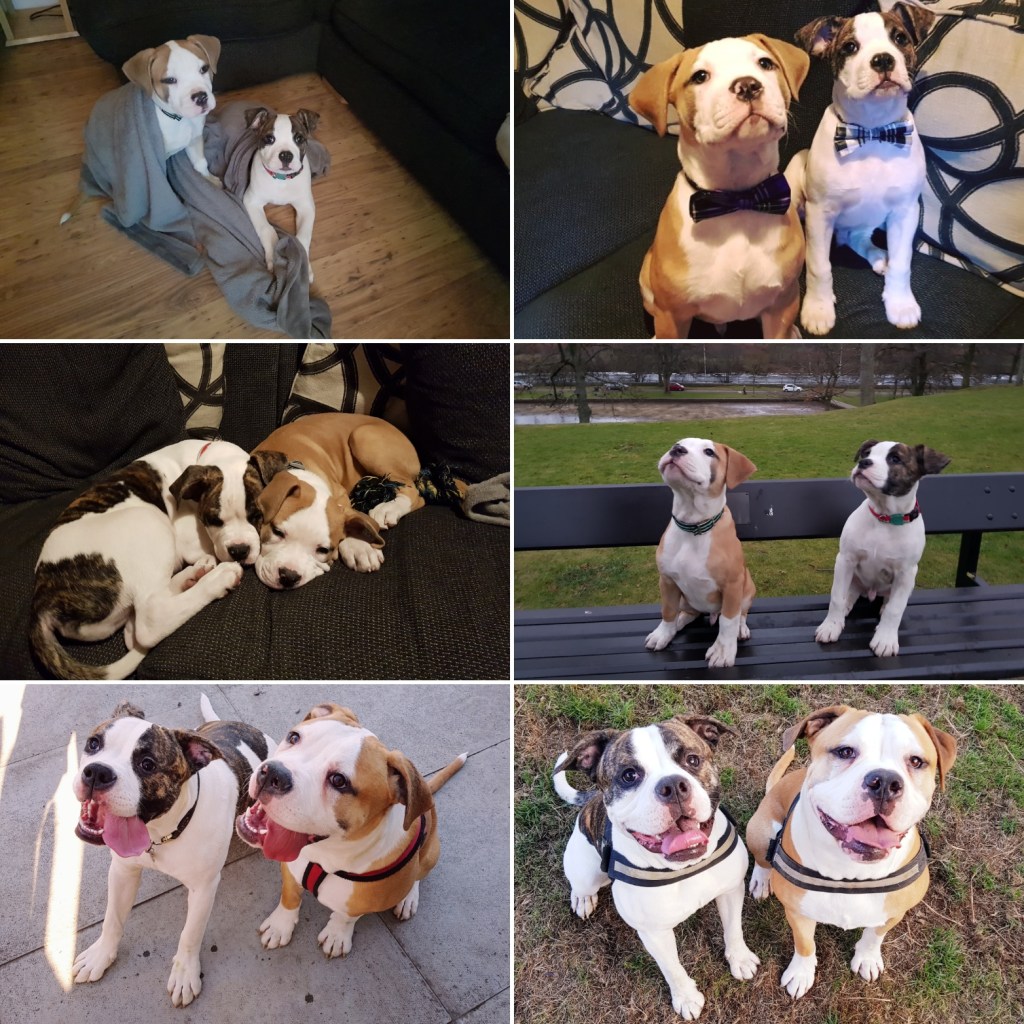
They are pleased to see me, obviously, but they don’t completely lose control. I trained them well when they were younger not to become overly excited when somebody walks through the door.
At least, that is the official explanation.
The alternative is that they enjoyed the peace and are quietly furious that I have returned to reclaim the attention.
Honey, I am the star.
Their restraint is probably healthier than the cinematic version, even if a small part of me would appreciate being received like a soldier returning from war.
Instead, they look at me, establish that it is indeed me, and carry on being dogs.
There is something comforting about that. They don’t need an explanation for where I have been or why I keep leaving. They only understand whether I am there now.
Working away has made me more aware of how much of life is made from repeated, unremarkable moments: walks, feeding times, the same patch of floor they always choose to lie on.
Those moments look insignificant until you calculate how many you have missed.
The Domestic Handover
James and I have been together for around eleven years and, believe it or not, we rarely argue.
We are opposites in many ways, which may be why it works. He does not return from months at sea carrying the energy of somebody conducting an unannounced hotel inspection.
I do.
My transition from professional service to peaceful domestic life can be interrupted by discovering that the housework has not been completed to what I consider an entirely reasonable standard and everybody else considers excessive.
Then there are the renovation jobs.
Some have been discussed for roughly four years, which means certain unfinished areas are now in danger of qualifying as original features.
I notice these things because I have been away imagining the completed version. James has been here living alongside the reality.
It would be easy for me to arrive with a list of everything that should have been done. It would also be unfair. James has maintained our life while I have been working away. He has dealt with the house, the dogs and all the ordinary responsibilities that don’t appear in photographs of yachts in the Mediterranean.
I return with fresh eyes. He has had to look at the same walls every day.
So, yes, I occasionally feel the urge to launch an immediate domestic improvement programme. Mostly, though, I am simply grateful to be beside him again.
There is no dramatic readjustment or huge relationship crisis. We quietly begin sharing space again. He adjusts to having me back. I try not to reorganise the entire house before I have fully unpacked.
Opposites attract.
Then they negotiate where everything should be kept.
When Rest Starts to Feel Like Laziness
At work, the day constantly tells me who I am.
There is always a task, a standard or somebody who needs something. I know where I should be and what I should be doing. Even when the plan changes—and it frequently does—the change produces another problem to solve.
Then I come home.
Nobody hands me a schedule. There is no service to prepare and no definitive moment when somebody tells me I have completed the day correctly.
This is the freedom I spent months wanting.
It can also be surprisingly uncomfortable.
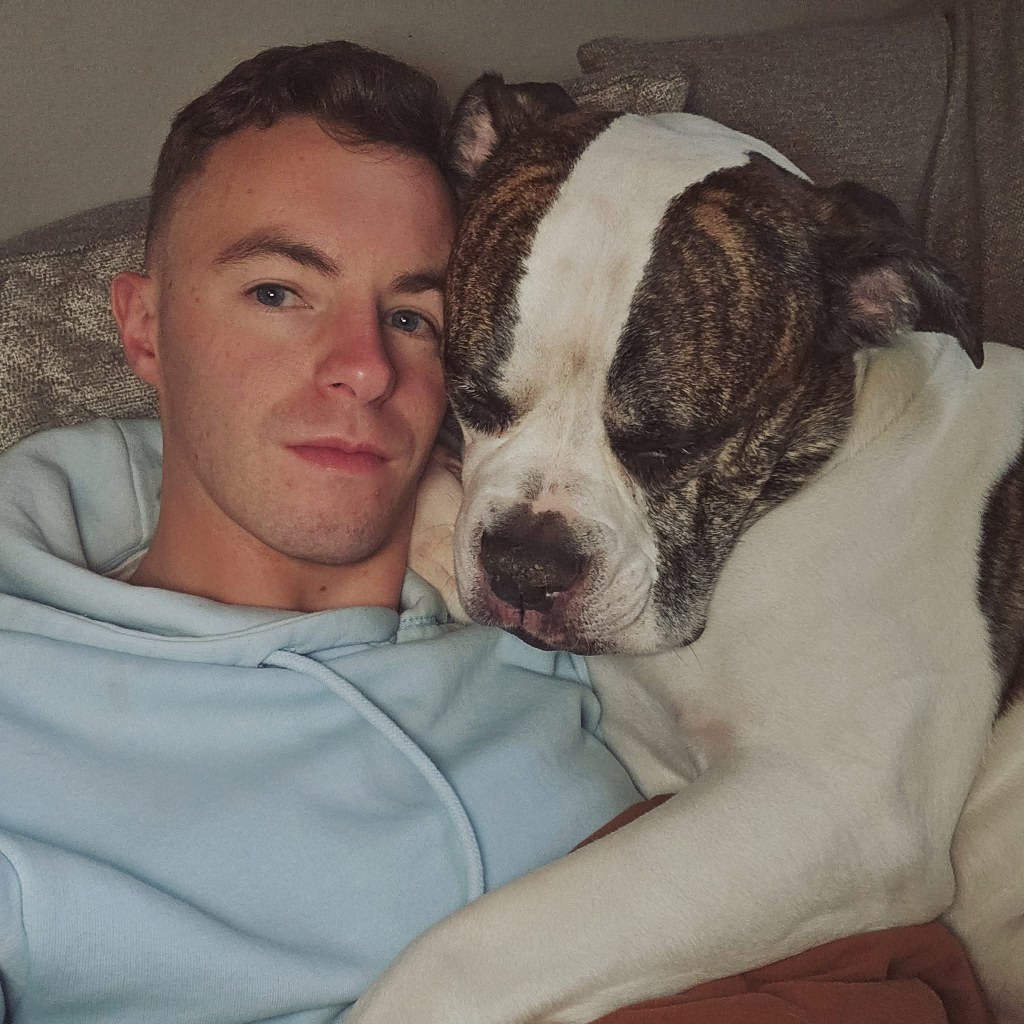
The first week is usually lost to exhaustion. I am run down, catching up on sleep and allowing the tension of the season to leave my body. There is relief in doing nothing because doing nothing is precisely what I need.
Then the second week arrives.
The novelty of being home begins to wear off. I have rested enough to notice that I am not doing very much, and rest starts to feel suspiciously like laziness.
I become complacent. I put things off. I feel guilty for wasting time at home when time at home is exactly what I have worked so hard to earn.
Part of me believes I should be productive because I am naturally happiest when I am busy. Another part knows that I may only have two to four weeks before I leave and do it all again.
By then, I can even begin to miss work.
Not every part of it. I don’t sit at home yearning for a late-night pantry pack-down or dreaming wistfully about somebody producing an empty glass seconds after I have cleaned the bar.
I miss the pace. I miss waking up knowing that the day will demand something from me. I miss being useful in a clear, measurable way.
I miss the version of myself who can move through pressure calmly, make decisions quickly and keep going long after I thought I was tired.
That does not mean I was wrong to crave home. It simply means I am better at handling a packed day than an empty one.
Rest is not a failure to use my leave properly. Sometimes, it is the reason I am able to return to work at all.
I am still learning the difference between having nothing to do and finally having nothing required of me.
At sea, I count down until I can stop.
At home, I sometimes panic when I finally do.
The Second Week
I feel at home the moment I return to Scotland.
The comfort is immediate. Something lifts as soon as my feet are back on Scottish ground. I know the place, the people and the version of myself that belongs here.
But feeling the relief of home is not the same as being settled into it.
That comes later.
Usually, it happens during the second week, once I have caught up on sleep and the initial excitement has softened. There is no announcement. I don’t wake up transformed.
Life simply starts to feel ordinary again.
The routines no longer seem unfamiliar. I stop measuring the house against the version I invented while I was away. James and I return to being ourselves rather than two people carefully readjusting around each other.
The dogs have accepted that the star has returned.
This is also the point at which I need to resist wishing the time away simply because the novelty has gone.
Peace is easy to appreciate when you are desperate for it. The challenge is recognising its value once it becomes normal.
I used to believe the countdown ended when I stepped back onto Scottish soil.
The weight lifts. I see James, return to the dogs and enter the home I have been carrying around in my head for months.
But another countdown begins almost immediately: how many weeks until I leave, how much I should fit in, how many people I need to see and whether I am using the time properly.
Perhaps that is why coming home can feel stranger than leaving. I arrive physically before I stop measuring every day by its distance from somewhere else.
The real return happens later, usually in that second week, when nothing particularly significant is happening. James is nearby. The dogs are calm. The unfinished jobs are still unfinished. For once, there is nowhere urgent to be.
Home has not waited for me.
It has simply made room for me again.
I am learning to do the same.


Leave a comment